
Introduction
A common question people have is what is the difference between marketing and social media marketing. This is something that needs to be understood because many people use the terms marketing and social media marketing interchangeably but digital marketing and social media marketing are not the same thing.
The short answer is that social media marketing is a part of marketing, which includes many different online channels, like digital marketing does. Digital marketing has a lot of parts and social media marketing is just one of them.
What is Digital Marketing?
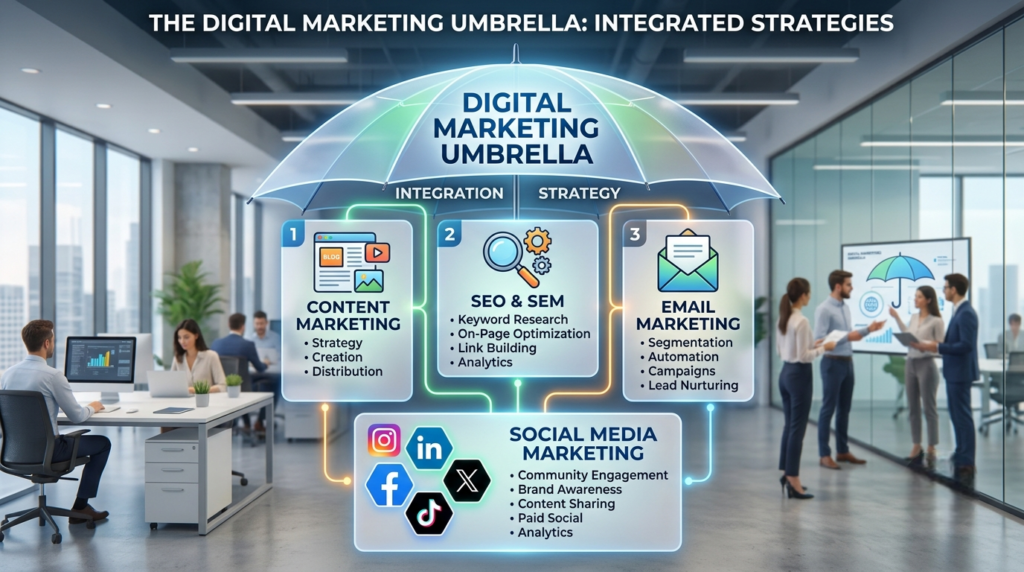
Digital marketing is a broad term. It includes all marketing efforts that use the internet or electronic devices. Think of it as the big umbrella .
Main parts of digital marketing:
Search Engine Optimization (SEO): Improving your website to rank higher on Google.
Pay-Per-Click (PPC) Advertising: Running paid ads on search engines like Google or Bing.
Email Marketing: Sending emails to connect with customers.
Content Marketing: Creating valuable content like blogs, videos, and guides.
Affiliate Marketing: Partnering with others to promote your products for a commission.
What is Social Media Marketing?
Social media marketing is a specific part of the digital marketing umbrella. It is focused only on social platforms to connect with audiences, build brands, and increase sales .
Key parts of social media marketing:
Content Creation & Sharing: Posting engaging content on platforms like Facebook and Instagram .
Paid Social Advertising: Running targeted ads directly on these platforms .
Community Engagement: Interacting with followers through comments and direct messages .
Influencer Collaborations: Working with creators to promote your brand .
Key Differences Summary
| Aspect | Digital Marketing | Social Media Marketing |
|---|---|---|
| Scope | Very broad, covers multiple channels and strategies . | Narrow, focused only on social media platforms . |
| Channels Used | Websites, search engines, emails, ads . | Instagram, TikTok, Facebook, LinkedIn . |
| Primary Goal | Overall online growth, lead generation, and conversions . | Brand awareness, audience engagement, community building . |
| Engagement | Less direct but focuses on conversions and data . | High direct interaction through comments, shares, and messages . |
Related from inkedspire.com:
Social Media Marketing Strategy Guide – Build a solid strategy
Which One Is Best for You?
The best choice depends on your business goals.
Aspect to consider:
Target Audience: Digital marketing can reach a global audience, while social media marketing is great for connecting with specific communities .
Budget: Social media can be more cost-effective for smaller budgets, especially with organic efforts. Digital marketing includes flexible options like affordable SEO .
Long-Term Goals: Digital marketing is excellent for long-term growth through data-driven, multi-channel strategies. Social media can be better for quick visibility and engagement .
The most effective approach combines both .
Pro tip: “A well-rounded marketing strategy combines both for maximum impact” .
Related from inkedspire.com:
Social Media Marketing for Beginners – Complete SMM guide
Key Differences Between Digital Marketing and Social Media Marketing
| Factor | Digital Marketing | Social Media Marketing |
|---|---|---|
| Scope | Broad (SEO, email, websites, ads, etc.) | Focused (social platforms only) |
| Channels | Websites, search engines, email, ads | Instagram, Facebook, TikTok, LinkedIn |
| Primary Goal | Overall online presence, conversions | Brand awareness, engagement, community |
| Strategy | Data-driven, multi-channel | Content-driven, audience-focused |
How to Build a Social Media Marketing Strategy
An effective social media strategy follows a clear framework. Here are the essential steps:
1. Set SMART Goals
Define specific, measurable, achievable, relevant, and time-bound goals that align with your broader business objectives.
2. Know Your Audience
Research where your target audience spends time. Focus on platforms where they are most active rather than spreading yourself thin.
3. Choose Your Platforms
Here is a quick overview of major platforms:
Facebook: Best for reach, community, and product discovery
Instagram: Visual storytelling, Reels, product showcases
TikTok: Short-form video, creative content, viral reach
LinkedIn: B2B marketing, thought leadership, professional networking
YouTube: Long-form video, tutorials, product demos
Pinterest: Product discovery, inspiration, niche markets
4. Create a Content Calendar
Plan your posts in advance. A calendar ensures consistency and aligns your content with campaign goals.
5. Engage with Your Audience
Social media is about conversation. Reply to comments, answer DMs, and build relationships. 73% of users will switch brands if ignored.
6. Track and Adjust
Use analytics to monitor engagement, reach, and conversions. Adjust your strategy based on what works.
Related from inkedspire.com:
Instagram Marketing for Beginners – Grow on Instagram
Best Practices for Social Media Marketing
Follow these tips for better results:
Create mobile-first content – 94% of users access social via mobile
Use short-form video – Reels and Shorts drive high engagement
Leverage user-generated content – Real customer stories build trust
Be consistent – Post regularly, even if not daily
Test and adapt – Try different content types and see what performs best
Related from inkedspire.com:
Content Creation for Beginners – Create engaging content
Final Thoughts
Digital marketing is the picture. Social media marketing is a piece of the digital marketing picture. To get the results you should use digital marketing and social media marketing together.
First you need to set goals for your social media marketing. Then you need to choose the media platforms where your audience is. After that you need to create content that’s consistent and valuable to your audience. You also need to talk to the people who follow you on media and see how your social media marketing is doing. If you do all these things and have a plan social media marketing can really help your business grow.
👉 Your step today: Define one smart goal, for your social media marketing and choose one social media platform to focus on.